



Understand How Climate Change Has Impacted the U.S. Home Insurance Market


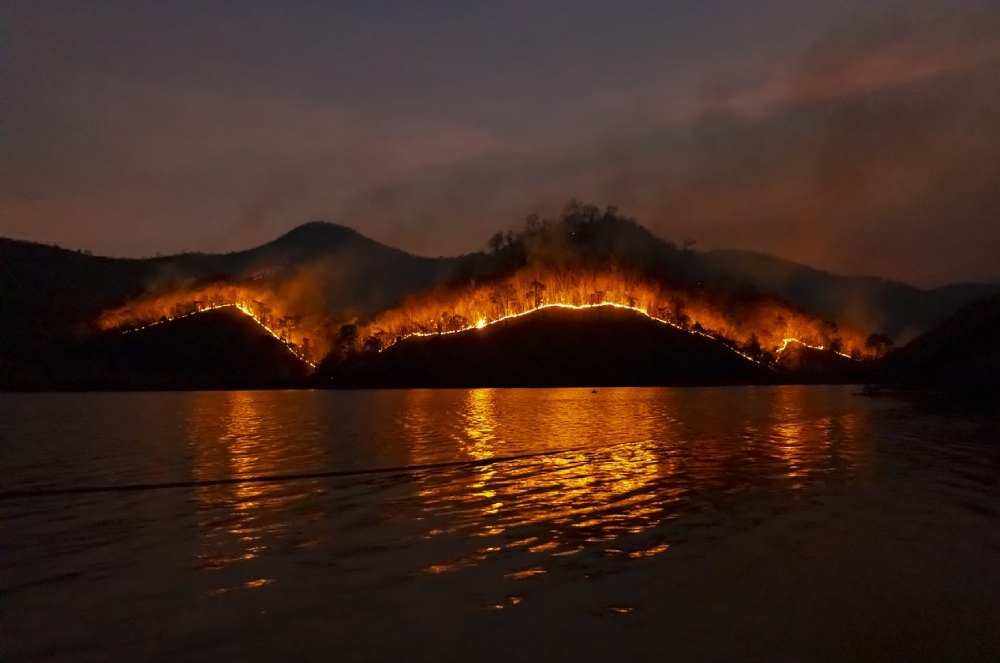
When Michael Monaghan, a real estate agent with Coldwell Banker Sellers Realty in Northern California, received an offer of $650,000 for a home in Bayside from a seller in September, he told the agent that the buyer needed to start looking for insurance immediately.
“I said, start working on it from day one,” Monaghan said. “Getting insurance is the most important thing now when you’re in escrow for closing the deal.”
In the past, acquiring homeowners insurance was not very difficult for buyers in the U.S. But as climate change intensifies, insurers—especially those in areas more affected by floods and fires—are raising their prices or withdrawing from the market altogether, impacting the affordability and availability of home and fire insurance.
In May 2023, for example, State Farm, the largest homeowners insurance company in the state, announced it would stop issuing policies in California, citing wildfire risks. This came after Allstate, another company, ceased issuing policies in the state.
Farmers Insurance considered it too risky to continue offering coverage for homes in Florida and exited the market.
“With many carriers leaving, it leaves other companies underwriting these very expensive policies,” Monaghan said. “Policies costing $10,000 a year? That’s impossible for some buyers who need to pay it all at once [along] with their closing costs.”
To help close the deal, Monaghan said some motivated sellers gave the buyer the equivalent of two years' worth of insurance costs.
But even if a buyer can pay their insurance costs up front (or if they are covered by the seller), buyers still back out of deals, worried about rising insurance premiums in the coming years.
He said buyers wonder: “Will [they] be able to afford this next year? Will their policy be canceled?”
When the day came to close the deal on the Bayside home for his clients, it was clear the buyers hadn’t secured insurance. Monaghan began making calls to help.
The most affordable option he found was $6,348 (about R$30,905) per year. The average cost of homeowners insurance in the U.S. is about $1,820 (around R$8,860), according to a NerdWallet analysis, but many variables come into play.
In the end, the buyers walked away. The expensive policy and the potential increase in insurance costs in the coming years killed the deal.
Now, the house is back on the market. But with insurance coverage so hard to find, it’s listed for $25,000 (R$121,715) more.
“It’s a really bad situation,” Monaghan said. “What insurers are saying is valid. Even if they have faulty maps or are relying on third-party information. They think the situation will get much worse over time.”
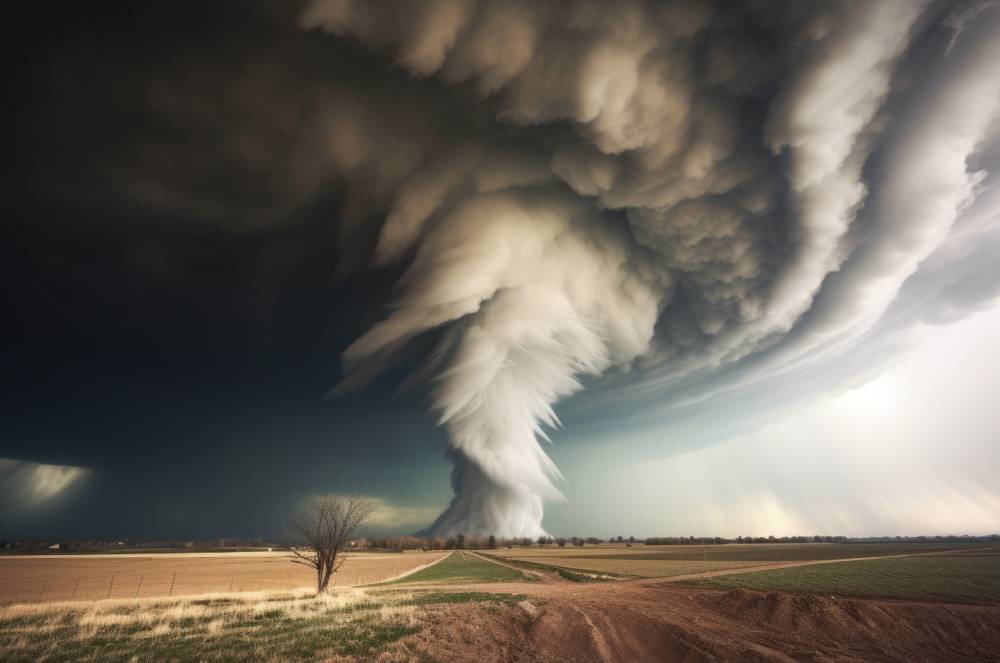
According to the National Oceanic and Atmospheric Administration (NOAA), the frequency and severity of storms are already worsening.
As of October 10, 2023, there have been 24 weather and climate disasters with losses exceeding $1 billion (R$4.87 billion) in the U.S.
This includes a drought, two floods, 18 severe storms, a tropical cyclone, a wildfire, and a winter storm.
Overall, these events resulted in 373 deaths and had significant economic effects.
In comparison, between 1980 and 2022, the typical annual average for such events was 8. In the last five years, the annual average was 18 events.
As climate risks continue, there is a standoff over who should bear the cost of insurance for increasingly severe risks.
Home Insurance Issues Becoming More Common
As insurance becomes scarce in some areas and costs rise, homebuyers are abandoning deals more frequently than in the past, said Amy Bach, executive director of United Policyholders, a consumer advocacy group for personal insurance based in San Francisco.
“Florida and Louisiana have been facing extreme property insurance drama for some time, starting with Hurricane Andrew in 1992 and then Hurricane Katrina in 2005,” Bach said.
“The severity of storms and the cost of repairs began to catch insurers' attention.”
Bach said that in places like Louisiana, insurers have seen large-scale risk mitigations implemented in the face of more frequent and severe storms, such as stronger levees.
“But I don’t think they’re there yet,” she said. “Insurers still don’t acknowledge the value of risk reduction. They’re not able to reduce prices and aren’t willing to let it affect their underwriting. That’s where the struggle lies now.”
However, she said, beyond climate change, other issues are also further increasing risk and cost.
“It’s not just climate change; it’s additional climate change,” Bach said.
It’s climate change, the aftermath of COVID, inflation, and technology that allows insurers to assess risks more broadly.
Her organization, which primarily focuses on helping people affected by disasters recover money from insurance companies, is mainly dedicated to issues of availability and affordability of insurance.
“The crisis has evolved from a very regional crisis affecting a few areas to a much larger crisis,” Bach said.
In California, for example, the percentage of homeowners using the FAIR Plan—an insurer of last resort comprised of all insurers licensed to issue property and casualty insurance in the state—remains below 5%, according to the California Department of Insurance.
Competition Isn’t Coming to the Rescue
Although insurers have always exited markets or changed their conditions in response to a policy, Bach said a competitor would always come in.
“Competition would, indeed, heal the wound,” she said. “But that’s not happening now.”
“We’re in a world where natural disasters are more common and more severe, and we’re in a state with diverse housing,” said Jennifer Branchini, an agent with Compass in Pleasanton and president of the California Association of Realtors.
“It’s with this insurance expense that everyone is concerned now. Yes, it’s expensive to rebuild. What is this doing to the market when it’s placed on the homeowner or the person who would like to buy the house?”
In a recent survey of CAR members, only 7% of agents reported that their deals fell through. Of those, 61% said the deal fell through because insurance was unavailable for the client. Another 19% didn’t get approved because the premium was too high.
And it’s not just low- or mid-priced homes.
Branchini heard of an agent in California who represented a buyer in purchasing an $8.2 million (R$39.92 million) property.
“The only insurance they could get was through State Farm, for $210,000 (R$1.022 million) per year,” she said. “Three days later, State Farm stopped the new coverage. They lost that insurance. That buyer walked away.”
The accessibility and availability of insurance are another part of the perfect storm in the current challenging real estate market, Branchini said.
“Buyers are facing high interest rates,” she said. “There’s already a lack of availability and affordability. And for many of the properties on the market, you can’t get insurance? Or it’s insurance that’s too inaccessible?”
She remains hopeful that competition and creativity will help the real estate market.
“We’ll have to see some creative solutions in the short term to create this competitive insurance market,” she said.
Source: CNN Brasil
At 2easy Insurance, we are committed to helping you understand your health options. Learn more about our medical assistance services and how we can protect you in critical moments. Your health is our priority.




















What our customers say about us


I am very grateful to 2Easy for always helping us find the best plan within our budget. Highly recommend!
Omaya Helai
I always found it difficult to get clear information about healthcare in the United States. Thanks to the professional service from 2Easy, everything has now become easier. Highly recommend.
Cynthia France
What our customers say about us
2Easy offers differentiated service for all types of insurance. I already have health, life, and now also car insurance with this company. I am very satisfied and highly recommend it.
Rafael Santos
2Easy Insurance is simply incredible. From the application of my insurance, clarification of doubts, and total support all the way.I recommend it because it is a highly reliable and responsible company.
Veridiana Polsachi
What our customers say about us
For over 4 years, I have been renewing my health insurance with 2Easy Insurance. I will always refer to this agency as a benchmark of competence and dedication.
Cicero Sarmento
I am very satisfied with 2Easy. I have always been well attended to, with professionalism and dedication. I recommend 2Easy to anyone looking for competence and security.
Mariana Almeida
